As blogging became more and more popular, it quickly became an issue inside of companies which found that their employees were sharing their life and
other information with the rest of the world. Especially for technology companies with a web-savvy work force, these employee blogs quickly attracted the attention of outsiders from the press who used them as resources in finding out more personal, inside details on company developments.
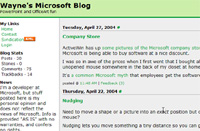 One of the best examples here is Microsoft, which saw many hundreds of employees starting their personal blogs and keeping a record of their daily life and work. The company found itself in a peculiar situation: employee blogs could potentially offer unintended insights and the company was unsure how to react. A ban on corporate blogging would not have been reasonable in light of Microsoft’s community image that was at stake; finally the company decided to reach out to its bloggers and officially host their sites to stimulate mutual respect. In a recent interview, one of Microsoft’s most well-known bloggers, Robert Scoble, suggested that the new medium may become very valuable for companies in spreading the word on products and developments. “Blogs are frequently updated personal Web journals than can dramatically help both small and large companies communicate their product messages,” Scoble says.
“What's really going on is a shift in how people relate to corporate communications. Twenty years ago, the only way you could get product information was from the PR departments. Even articles in newspapers were based on press releases. Today people are getting their information from individuals within the companies. People don't trust companies, even companies they like. I mean, who would you rather get product information from, an individual from within the company, an engineer perhaps, or the company's PR department?”
-- Robert Scoble in The Four-Letter Word That Can Get People Excited About Your Products. Microsoft.com, April 30, 2004.
Just as blogs will not replace journalism, their role in corporate public relations will always remain an unofficial one. However, their value to customers who wish to follow these corporate blogs may become more and more important over time. Currently however, it appears that the audiences of PR and of blogging are still very separate; the first addresses management, while the latter is followed mostly by technical insiders.