machine learning
-
MonoTrack: Shuttle trajectory reconstruction from monocular badminton videoPaul Liu and Jui-Hsien Wang
[pdf]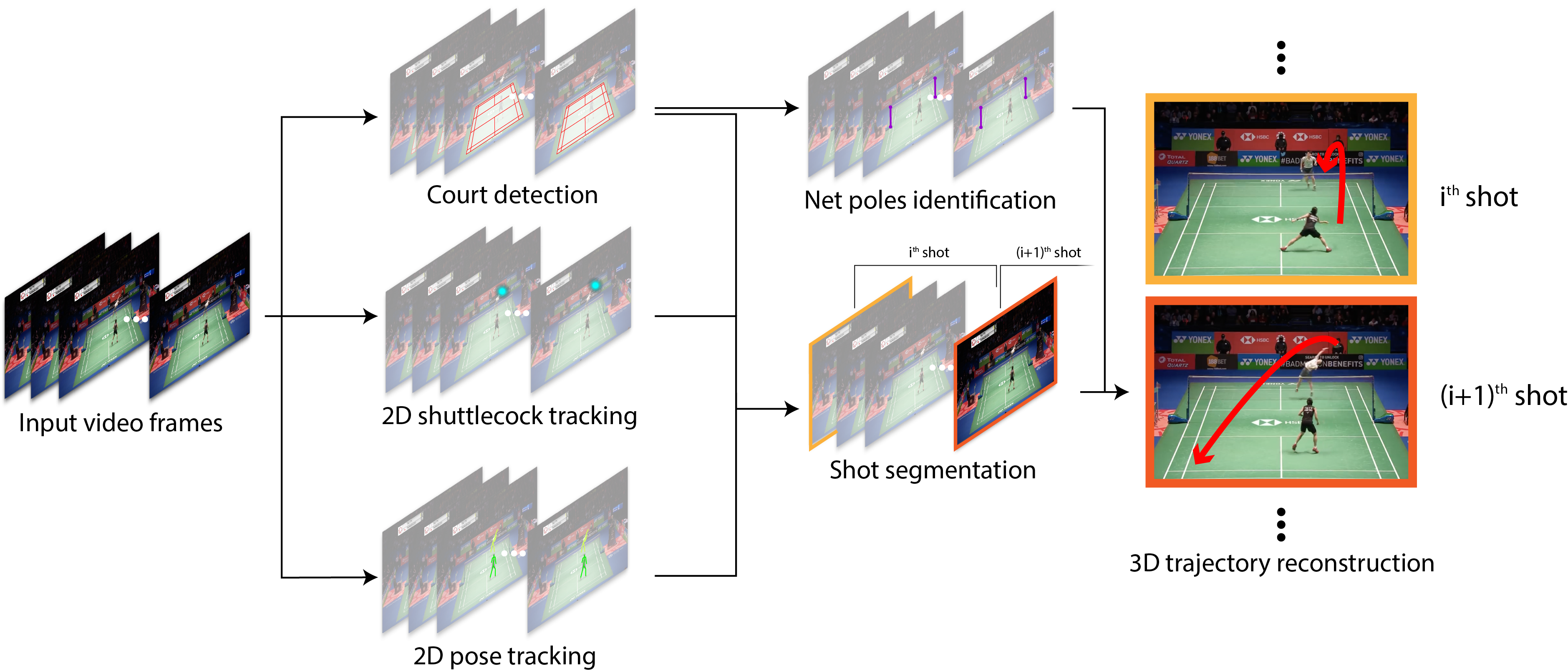
Trajectory estimation is a fundamental component of racket sport analytics, as the trajectory contains information not only about the winning and losing of each point, but also how it was won or lost. In sports such as badminton, players benefit from knowing the full 3D trajectory, as the height of shuttlecock or ball provides valuable tactical information. Unfortunately, 3D reconstruction is a notoriously hard problem, and standard trajectory estimators can only track 2D pixel coordinates. In this work, we present the first complete end-to-end system for the extraction and segmentation of 3D shuttle trajectories from monocular badminton videos. Our system integrates badminton domain knowledge such as court dimension, shot placement, physical laws of motion, along with vision-based features such as player poses and shuttle tracking. We find that significant engineering efforts and model improvements are needed to make the overall system robust, and as a by-product of our work, improve state-of-the-art results on court recognition, 2D trajectory estimation, and hit recognition.
-
Improving Query Categorization with Categorical Graph Neural NetworksTianchuan Du, Keng-Hao Chang, Paul Liu, Ruofei Zhang
[pdf]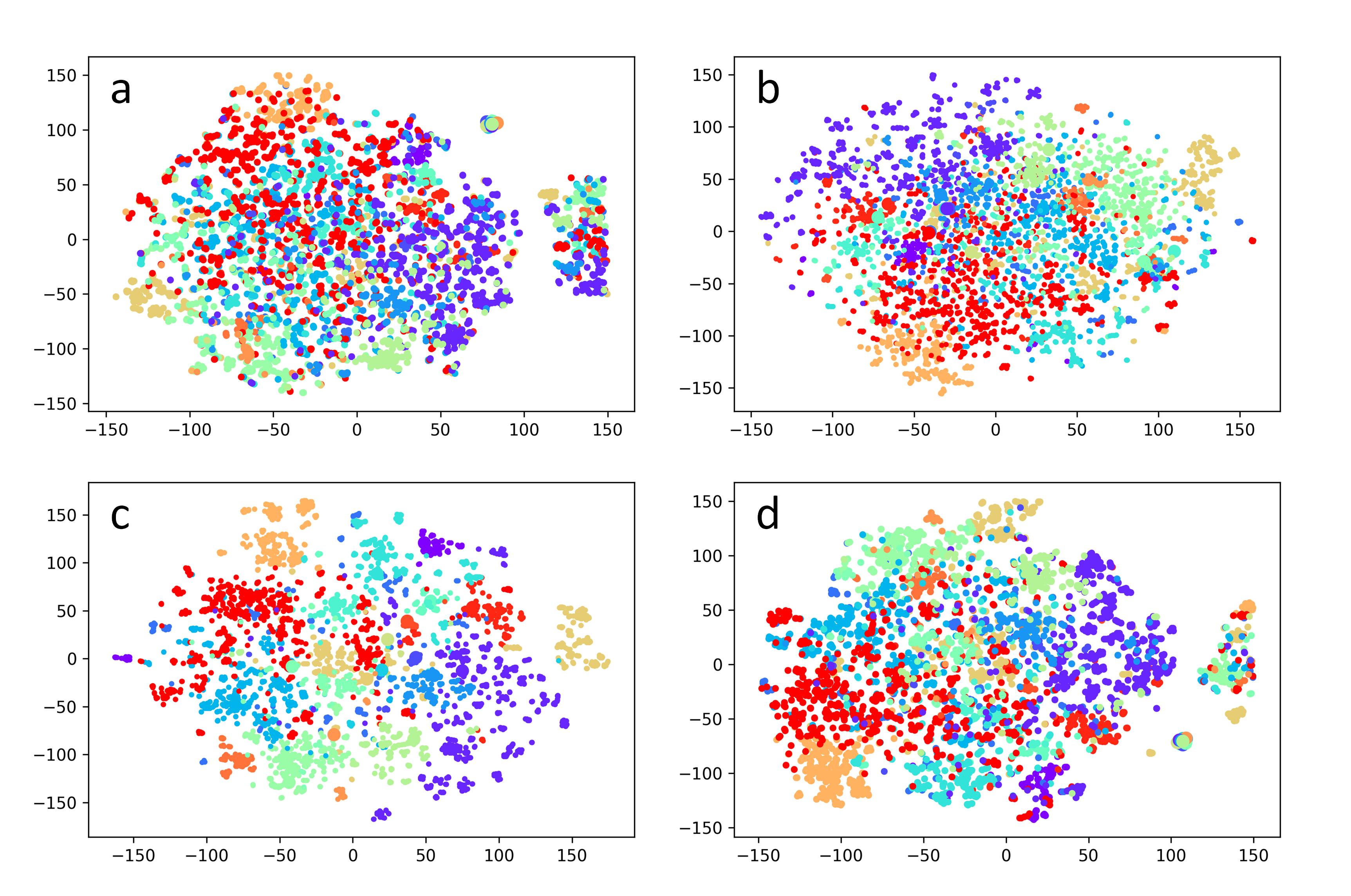
We propose a class of graph-based network structures, which we call Categorical Graph Neural Networks (CaGNN). Over a query categorization dataset of 2k categories and another ad title categorization dataset of 5k categories, CaGNN improves performance significantly compared to a baseline Deep Neural Network model without the CaGNN structure. Notably, top 3 prediction recall increases from 90.15% to 91.40% for the ad title categorization task, for which is quite significant at over 90% level for more than 5k categories. By inspecting the learned category embeddings and the flow of message passing, we show that CaGNN effectively encapsulates useful graph structural information. Online A/B testing result shows that an ad ranking model with CaGNN-based features has increased ad click-through rate by 1.81% and reduced defect rate by 2.64%. The model has been deployed to production.