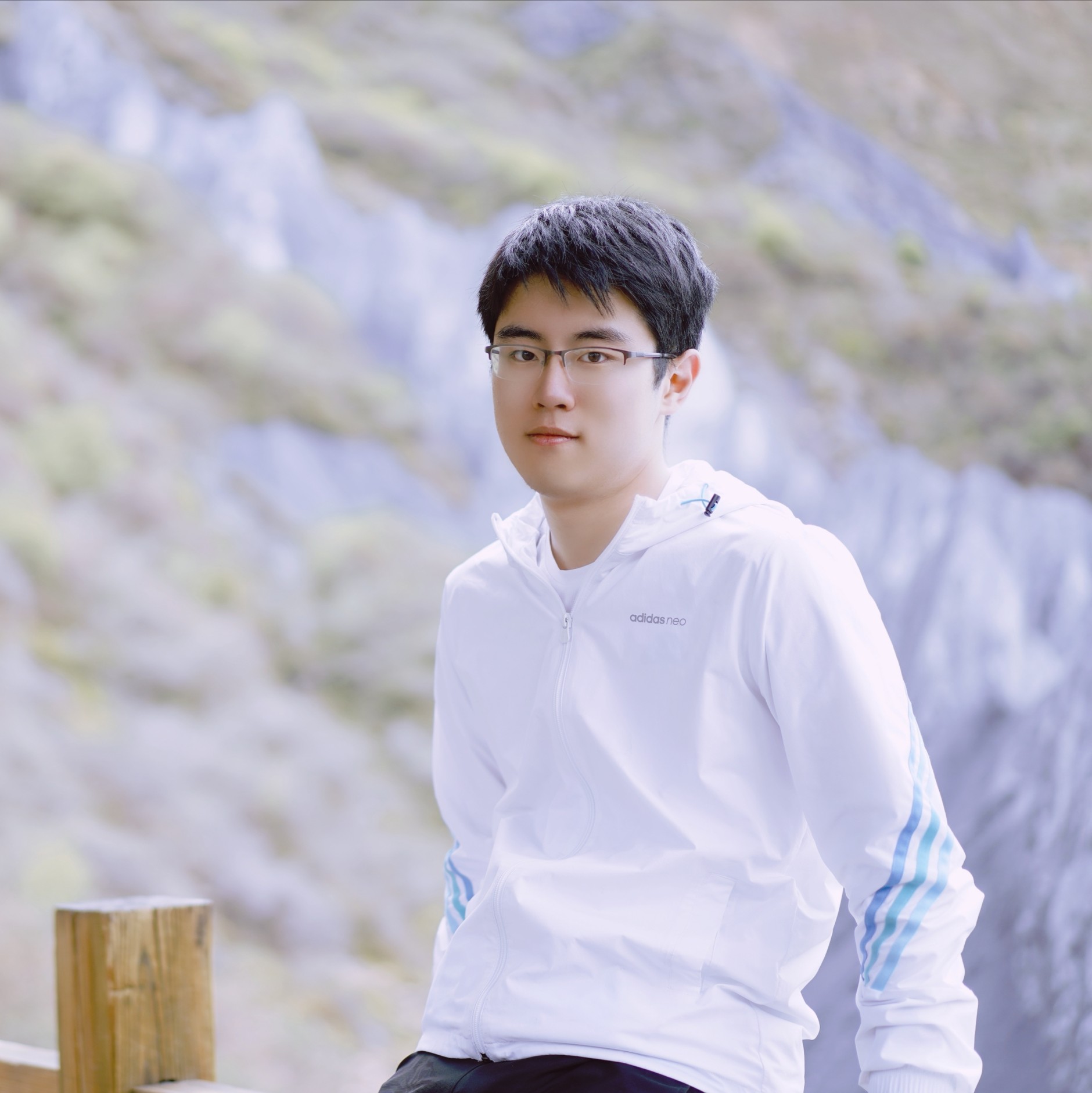
Yucheng Jiang
Ph.D. student in Computer Science, Stanford University
I am a Ph.D. student in Computer Science at Stanford University, advised by Monica S. Lam. My research lies at the intersection of natural language processing and human–computer interaction. I study AI agents that learn from human expertise. In turn, these agents help people do more valuable scientific and economic work.
Previously, I received my M.S. in Computer Science from Stanford, worked as a software engineer at Apple, and received my B.S. in Statistics and Computer Science from the University of Illinois Urbana-Champaign, where I was supervised by Jiawei Han.
01
Deep research agents
Deep research agents answer complex, open-ended questions by searching the web and large databases, cross-checking what they find, and writing long-form reports with citations. They turn hours of searching and reading into a report that people can verify, learn from, and build on.
- EMNLP 2024
Co-STORM
Learning the unknown unknowns through collaborative agent discourseHelps people learn about unfamiliar topics through a simulated roundtable conversation among LLM agents, which they can follow or join at any point. The agents raise questions people would not think to ask, making serendipitous discovery more likely, and a dynamic mind map organizes the discussion to reduce mental effort over long sessions.
- NAACL 2024
STORM
Writing grounded, Wikipedia-style articles from scratchWrites cited long-form articles by modeling the pre-writing stage: discovering perspectives on a topic, simulating expert interviews grounded in web search, and curating the findings into an outline.
02
Human–agent collaboration and agents for real work
AI agents are beginning to take on real work, but most are designed to act alone. This work studies how people actually carry out their tasks and what they want from AI, and builds agents that collaborate with people and keep them in control.
- EMNLP 2026
Task Model Induction
Learning how work is done from computer-use tracesInduces symbolic, auditable models of how people perform tasks from passively recorded computer use (screenshots, mouse, and keyboard events), capturing both the goals they pursue and the procedures they follow.
- Preprint 2025
Future of Work with AI Agents
Automation vs. augmentation across the U.S. workforceA worker-centric audit of which tasks people want AI agents to automate or augment, compared with what current agents can do. Introduces the Human Agency Scale and the WORKBank dataset.
03
Agent context management
Context management is the part of an agent harness that decides what information the model sees at each step. It lets agents persist through long-horizon tasks, so that the reasoning ability of today's models carries into sustained, long-running work.
- ACL 2026 Findings
STITCH & CAME-Bench
Grounding agent memory in contextual intentSTITCH indexes each step of a long agent trajectory by its contextual intent (goal, action type, and key entities) and retrieves memory by intent. CAME-Bench evaluates memory in long interactions where goals shift and entities recur.
Talks
- Stanford CS 224V
Deep Research Agents
- Stanford HAI · Public AI Assistant to World Wide Knowledge
Human–AI Co-Research: Interaction and Collaboration in Public AI Assistants
- EMNLP 2025
Creative Planning with Language Models
- DeepLearning.AI
Deep Research and Automatic Educational Content Creation
- Stanford CS 224V
Knowledge Curation and Human–AI Interaction
- Google DeepMind
Co-STORM: Engaged Human Learning through Collaborative Discourse with LLM Agents
- EMNLP 2024 Workshop on NLP for Wikipedia
Co-STORM: Engaged Human Learning through Collaborative Discourse with LLM Agents
- Synopsys
Deep Research for Industry: Educating Users and Driving Vertical Adoption
- Stanford CS 224V
Knowledge Curation
Teaching
- Stanford University
CS 224V: Conversational Virtual Assistants with Deep Learning
- University of Illinois Urbana-Champaign
CS 222: Software Design Lab
- University of Illinois Urbana-Champaign
CS 225: Data Structures
- University of Illinois Urbana-Champaign
CS 374: Introduction to Algorithms and Models of Computation
- University of Illinois Urbana-Champaign
CS 126: Software Design Studio
- University of Illinois Urbana-Champaign
CS 128: Introduction to Computer Science II
- University of Illinois Urbana-Champaign
CS 125: Introduction to Computer Science