Anonymity and Plurality in the Internet Age The HD-DVD Processing Key |
| Home | Xbox | HD-DVD | Conclusion | Works Cited | About this Website |
| Introduction | History | Impact | Motivations |
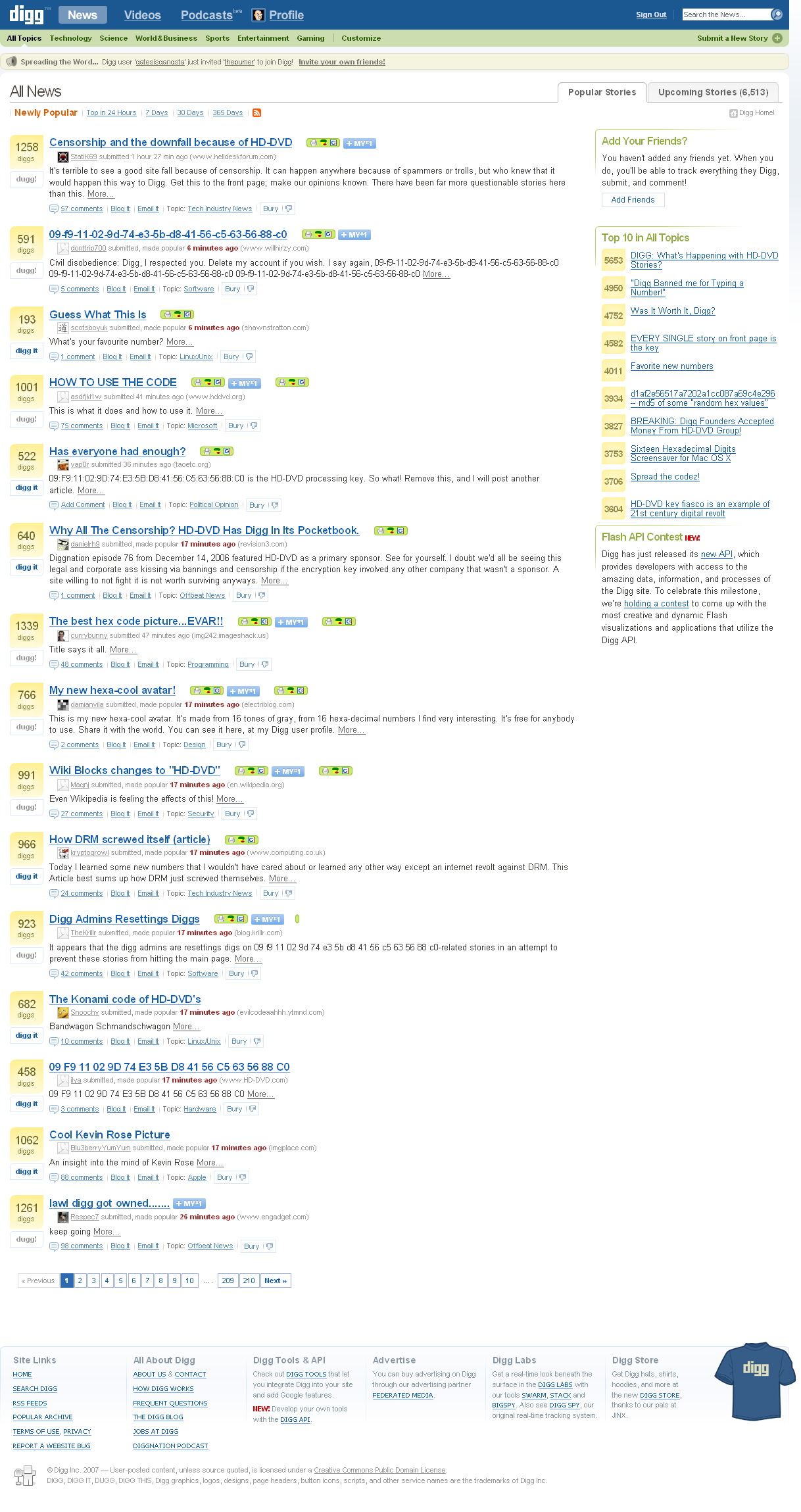
ImpactThe discovery of the HD DVD processing key has had various consequences. The one that can be recognized most easily is the impact the key had on companies that rely on the encryption capability of the disc to protect and secure their data. AACS, the company in charge of developing this safety mechanism, has been the party most heavily affected from the discovery of this key. The consortium, founded mostly by members of the computer and motion picture industries, has been raging against every site that has published the key, arguing that they violated the anti-circumvention provisions stated in the U.S. Digital Millennium Copyright Act (DMCA). As early as April 17, 2007, AACS began issuing and sending DMCA violation notices to websites that had posted the key or made the key accessible by posting links to it. At first, most websites complied with the AACS’ request, removing any content related to the key. As more websites started to receive cease and desist notices however, people reacted and the AACS processing key controversy took an interesting new turn. The new “turn” occurred on May 1, when the technology news site Digg, following a cease and desist notice from the AACS, decided to ban every post and close every account that has any relation to the processing key. This measure however, sparked what some people have referred to as a “cyber-riot”. People all around the world started flooding the news site and the internet with posts that included the key. The reaction from the people was so massive, that within one week, the number of hits the key received in Google jumped from 9,410 to more than 700,000. People were so infuriated by the AACS’ cease and desist notifications, and Digg’s decision to ban the number, that people began using creative ways of spreading the key, such as images, songs, poetry, music videos and movies and even on t-shirts. The phenomenon was so strong, that after a couple of days, Digg decided to side with its thousands of users and allow people to post the key freely. “But now, after seeing hundreds of stories and reading thousands of comments, you’ve made it clear. You’d rather see Digg go down fighting than bow down to a bigger company. We hear you, and effective immediately we won’t delete stories or comments containing the code and will deal with whatever the consequences might be.” (to see a screenshot from the Digg news site on the day of the "revolt", click here) The AACS reactions were somewhat dubious, and they initially referred to the revolt between Digg and its users as an "interesting new twist". Although they stated that they would continue taking legal actions against sites that had posted, spread or helped spread the key, many have affirmed that this is an impossible task. Not only because a search for the key on Google returns more than 1,240,000 pages (meaning they would have to take action against a similar number of pages), but also due to the contrary effect of such measures. Companies that rely on this new technology have also noticed this phenomenon and, when asked what legal options they have in mind, some do not seem to agree on the best option. As an attorney at Toshiba commented, “if you try to stick up for what you have a legal right to do, and you're somewhat worse off because of it, that's an interesting concept.” On to Motivations. |
| Copyright © 2007 Daniel Vogel & Daniel Espinosa. All rights reserved. |