General Background
"Each of the five major record labels has invested in one online service or another, hoping to reclaim control over the digital distribution of their wares and salvage some of the action they've lost to illegal song swapping." (from Buechner, go here for more information.)
Since the invention of audio compression in the early 1990’s, music file sharing has been a part of Internet culture. Music file sharing has taken many forms in the last decade, from postings on web sites to secret AOL chat rooms to public FTP servers. Peer-to-peer file sharing systems gave a significant boost to the craze; they allow users to download music from other users, eliminating the need for centralized servers with a store of illegal song files. Napster was one of the first of these systems, and one of the first to be sued by the Recording Industry Association of America (RIAA) for contributory copyright infringement. Since then dozens of file sharing clients have become popular. Some have resisted attempts by the RIAA to shut them down; others have not.
The RIAA and many musicians argue that illegal file sharing is hurting the music industry. Consumers are less likely to buy music legally when they can just as easily download it for free. Nielsen SoundScan research suggests, however, that while "shipped" units of compact discs has gone down since the appearance of peer-to-peer file sharing systems, the number of sold albums has increased.
Music downloaders and other musicians claim peer-to-peer file sharing is good for the music industry. It helps smaller artists spread their music and lets users listen to music before they decide to buy albums.
The appearance of paid online music services -music stores and subscription plans- have added a new element to the Internet music debate. Given a legal alternative to file sharing, will users choose it? Legal systems are growing in size and number, but illegal systems remain a strong force.
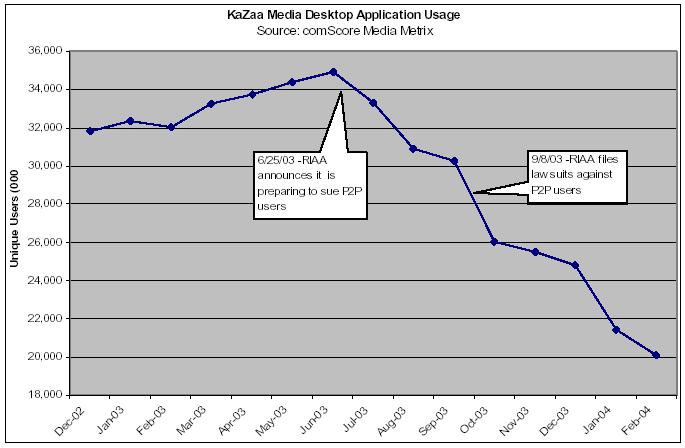
Source: www.pewinternet.org
A Look At Some Filesharing Programs
Here is a in depth look at iTunes and more...
Survey Results
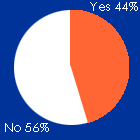
We conducted a survey of 242 college students concerning file-sharing and ethics, and this is what we found.
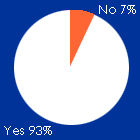
Have you ever paid for copyrighted music you downloaded via the internet?
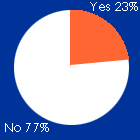
Is it ethical to download copyrighted music for free?
Legal Background
Many people who downloaded copyrighted music in 2003 did not even know that their actions were illegal. The RIAA has used a series of lawsuits to make these law violations public. Namely, there have been numerous lawsuits against the developers of software that are used to for illegal downloads, such as KaZaA, Morpheus, Aimster, Napster, and Grokster. In addition, the RIAA has also been attacking individuals for sharing files on the internet. The basic charges dealing with copyright infringement are as follows:
1) Direct infringement: If you are not the copyright owner of a song, and you reproduce, distribute, or perform the song without consent of the owner (or without fitting into one of the strict exceptions categories) you have committed direct infringement.
2) Indirect (secondary) infringement: The developers of file-sharing programs are clearly not directly violating any direct copyright laws since they are not participating in sharing copyrighted material. There are two types of indirect infringement:
a. Contributory infringement: "aiding and abetting" the process of direct infringement; in order to be found guilty of contributory infringement, there must be someone who commits the direct infringement, knowledge of the direct infringement, and the contribution toward the direct infringement.
b. Vicarious infringement: having responsibility/rights over the direct infringer but allowing the infringement to continue. In this case, the accused must also reap financial benefit from the direct infringement.
Some common defenses for these lawsuits come in the following form:
1) No direct infringer - If there are no users that are directly infringing on copyright laws, then the software company cannot be accused of indirect infringement.
2) The "Betamax defense" - In a 1984 case over the legality of VCRs (Universal City Studios vs. Sony), the Supreme Court ruled that as long as the product could be used for non-infringing purposes, then it is not subject to contributory or vicarious infringement.
3) "Safe harbors" - Enacted in 1998, a number of specific exceptions are made to online service providers, allowing them to infringe on copyright laws if the infringement is for one of these four functions: network transmissions, caching, storage of materials for users, and the provision of information location tools. It is very difficult for a peer-to-peer system to fall into any of these categories without careful planning.
4) Ban on circumvention technologies - The Digital Millennium Copyright Act made it illegal for a program to aid in circumventing a technology/device that protects copyrighted works. However, if a file-sharing system only aids the file transfer, it cannot be accused of circumvention.
For additional information, Fred von Lohman, legal counsel for the MGM vs. Grokster case, has provided an in depth discussion here.
