
In 1991, Chilean universities proposed a network that would connect them
to the Internet. The costs of this network, called REUNA, would be paid by its members and
their potential clients. However, most of the university negotiators had little exposure
to international networks and no experience of sharing such resources. Smaller
universities were afraid they would be subsidizing the large, and the large felt they
deserved more resources. They agreed to use a volume-based pricing system, but could not
agree on the particulars.
Three universities decided to create their own Internet connected network, called Unired.
These two networks were established in January 1992 and within sixteen months ten
universities had joined REUNA and six further sites had connected to Unired. The sad
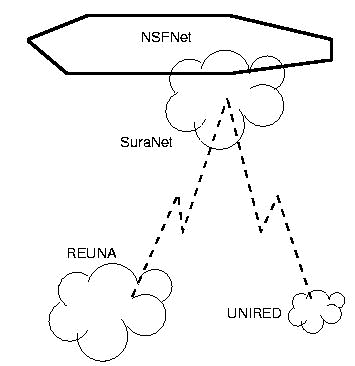
result of this split is that the two Chilean national networks are not directly
interconnected and any traffic between them must travel through the U.S. backbone.

When more sites connected it was proposed hat a charge per megabyte on
inbound and outbound traffic would fund the international link. Following opposition from
users, the volume charges now take the form of coarse charging brackets with discount for
off peak traffic.
While the catalyst for the split from REUNA may have been disagreement over cost sharing
rules, it cannot have been disagreement over the concept of volume charging itself: the
initial charging policies of the rival networks were both based on volume charging. The
split seems to have had more to do with the competitive relationship between Chile's
largest universities. The University of Chile dominated early networking in Chile and this
influence continued in the development of REUNA. Unired, however, is dominated by the
Catholic University. University politics, and not pricing philosophies, seem to have
caused the split between REUNA and Unired.