The compulsive gambling problem
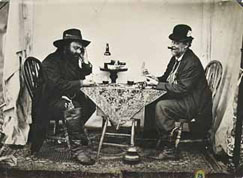 People generally
perceive stock trading as a legitimate profession and form of investment.
The legitimacy of the financial market, however, only contributes to the
problem of daytraders, who are essentially little more than gamblers.
Forbes noted the excitement
and obsession that most daytraders show:
People generally
perceive stock trading as a legitimate profession and form of investment.
The legitimacy of the financial market, however, only contributes to the
problem of daytraders, who are essentially little more than gamblers.
Forbes noted the excitement
and obsession that most daytraders show:
"There is a certain adrenaline rush I get every time I hit that enter key and my buy order goes through," says Nicolas Birbas, who made $21,000 in one day recently when Multiple Zones ran from $10 to $59 after the company announced it would set up an auction Web site: "I cannot wait to get up in the morning and trade. This is the most exciting thing in the world for me right now," exclaims 51-year-old personal injury attorney Barry Plotkin.
 Gamblers
Anonymous identifies such behavior as a sign of compulsive gambling.
On their web site, a list of twenty "symptom" questions include:
Gamblers
Anonymous identifies such behavior as a sign of compulsive gambling.
On their web site, a list of twenty "symptom" questions include:
- After losing, did you feel you must return as soon as possible and win back your losses?
- After a win did you have a strong urge to return and win more?
Most daytraders display these symptoms, but rarely recognize them as signs of a dangerous addiction.
Daytrading companies, of course, encourage this kind of pattern. The
Washington Post published an article
focusing on Bob Bright, a blackjack gambler in Las Vegas who started a
daytrading company after the casinos barred him for card-counting. Clients
now pay him $25,000 as initial deposit, a  commission
on every transaction, and one quarter of any profits they might make.
The profits or losses for an individual on any given day can be in the
tens of thousands of dollars, and there are examples of people exceeding
their limits, and being cut off when they lose too much money. Still,
the allure remains: some of Bright's employees are professionals, both
in investment and other fields, who recently quit their jobs to do daytrading
full-time. Few of them question the company's integrity, though Massachusetts
and Texas recently sued several similar firms for fraud and false advertising.
commission
on every transaction, and one quarter of any profits they might make.
The profits or losses for an individual on any given day can be in the
tens of thousands of dollars, and there are examples of people exceeding
their limits, and being cut off when they lose too much money. Still,
the allure remains: some of Bright's employees are professionals, both
in investment and other fields, who recently quit their jobs to do daytrading
full-time. Few of them question the company's integrity, though Massachusetts
and Texas recently sued several similar firms for fraud and false advertising.
The consequences of compulsive gambling are well known. The California Council on Problem Gambling offers a brief summary of how excessive gambling harms both the gambler and society as a whole:
- Family disruption, neglected or abused children, divorce, impoverishment, mental breakdown.
- Billions of dollars worth of productivity lost by business and industry through absenteeism, wasted time, poor work performance, theft of materials and accidents.
- Criminal acts committed to raise money in order to continue gambling after heavy losses and mounting debts. The longer the gambling problem continues untreated, the greater the possibility of arrest and imprisonment.
- The unabated misery of being in the grips of an uncontrollable illness, without even knowing it, thus permitting the illness to wreck family, career and even life which, in many cases, ends in suicide.